
Blog

Quis custodiet ipsos custodes?

Over a thousand years ago, while writing in one of his Satires, the Roman poet Juvenal posed a question that has been haunting humanity ever since. ‘Quis custodiet ipsos custodes?’ loosely translates to ‘Who will guard the guards?’. Over the centuries, policing structures, judicial systems, and regulatory agencies have developed to monitor corporate behavior, citizen behavior, and government actions. Even the NGO space is now subject to systems of checks and balances.  But who monitors the monitors? Thanks in large part to advances in Internet and Communication Technologies (ICTs) and the advent of social media there is now a bona fide and effective answer finally emerging: We Do.

Public trust is becoming the social and business currency de jour, even more ubiquitously powerful than the heralded bitcoin and blockchain. (For a good background read pick up Clay Shirkey’s Here Comes Everybody or see his Ted talk on Cognitive Surplus). Public trust has always been lurking in the fields, market places, and town squares and would periodically erupt to toss out a kingdom, confront a police force, replace a regime, or send a company’s stock price to zero. But it was often not until the steel was sharpened and the torches ablaze that the tangible degradation of faith in an institution was confirmed to have disappeared. Now however, through the analysis of crowd sourced information and opinion, we can evaluate how the guards are perceived and offer solutions and adjustments of engagement before the cobblestones become wet with blood. Aided by social media monitoring tools and techniques taught in the Digital and Social Media class at KSU, this month’s blog will evaluate the engagement of the institution operating in one of the most sensitive global hot spots today, and that is the Independent Electoral and Boundary Commission (IEBC) in Kenya.

The IEBC is an apolitical regulatory agency created by the new Kenyan Constitution in 2011. It is so apolitical that none of the nine commissioners are even allowed to be members in a political party. It is more akin to a company with a single product: To deliver a free and fair election process. The IEBC, by some measures, has been very successful in the delivery of that product to the public. The presidential elections of 2013, though quite close, were largely free of the rape, burnings, deaths and forced displacement that haunted the country in 2008. The 2017 elections were initially more worrisome, with such leading indicators as machete sales spiking through the roof (the nation has been successful in keeping firearm ownership quite low.) The August 8th elections were at the outset orderly, but multiple claims of fraud emerged in the aftermath, and there was sporadic violence. An apparently heavy handed police response resulted in scores of deaths, far below the thousand killed in 2008, but still each an individual tragedy. Then, the completely unexpected occurred.

For the first time in African history, a judiciary body stepped in and successfully nullified an election. The surprise ruling last week by the Kenyan Supreme Court was critical of certain aspects of the process and ordered the IEBC to construct a redo by November 1. The ability of the IEBC to rapidly conduct such a runoff is largely a function of the faith that the public has in the institution. Because of its apolitical nature, much of the discourse and engagement between the IEBC and the ‘customer’ takes place online. As Dr. Laura Beth Daws has noted before, these venues offer a plethora of free empirical data for the taking. TweetReach, by Union Metrics, was used to conduct a thorough analysis, not of the IEBC’s own feed, but of the marketplace use of the #IEBC hashtag. One hundred tweets over a recent 15 hour period were depicted. What kind of users were citing it? Influencers, bots, or ordinary citizens? What was the tone of the customers? Is IEBC perceived as part of the solution or part of the problem? This report starts to answer those questions and more:

TweetReach_iebc

Note that there is a healthy mix of contributor type. 22 of the 100 tweets were sent by users with over 10,000 followers. That is representative that some prominent influencers were citing the organization. 45 of the 100 were sent by users with between 1000 and 10,000 followers. This is an important group since it more likely represents non-institutional, authentic voices with a respectable genuine following. 33 of the 100 were sent by users with less than 100 followers. For context, there are 38 million mobile phone subscriptions in Kenya, representing 87% of the total population of 44 million. To have a third of the tweets citing the IEBC hashtag to have come from newer Twitter users with undeveloped following momentum is actually quite healthy and adds more credibility to the content analysis. All of this is a long way of saying that this was a good mix of origination type.

The content and tone reflected the diversity of the contributors. There was speculation of tension between some of the IEBC commissioners. There were worries that the computer systems may have been compromised. There was an ask for the IEBC to defend itself and speak to the hacking rumors. There was a call for one or more of the commissioners to resign. In some tweets there was empathy shown for the critical but thankless position of the regulator, with one poster calling the IEBC a career graveyard. Many others noted that the Supreme Court did implicitly voice confidence in the IEBC by calling upon them to run the process again. A few others (as well as some NGOs) pointed out that this ruling is actually a sound affirmation of the rule of law and the balance of powers in one of Africa’s growing democracies.

To develop further the recommendations for IEBC’s engagement, a triangulation with their Facebook activity is helpful. Likealyzer is a tool that ranks an organization’s Facebook page from 1 to 100 for engagement. As you see below the IEBC website scored a 74. To put it in perspective, even the Facebook page for the Kenyan Rugby team scored higher at 75.

Likealyzer analysis

There are some important admonishments in this analysis that point out that the IEBC Facebook page is late or non-existent in responding to inquiries. A cultural profile is emerging that the organization believes that they are merely a determinator and then a disseminator of information, when trust is actually built via two way dialogue. Likealyzer called the page’s response rate ‘catastrophic.’ The engagement rate of 8% appears anemic but not surprising if it is a one way conversation. Does a reader respond back to a newspaper? The report did highlight that there were better reactions to posts that included images, especially posts between 6 and 9 pm GMT. The ‘likes’ also had exhibited impressive growth north of 40%, now reaching 200,000 for the page, so there was initially an underlying base of goodwill to be leveraged.

The report recommends more links implemented by IEBC to other pages and posts, which makes sense. There isn’t even current continuity between the IEBC’s own Facebook and Twitter pages. For instance, the Twitter feed was explicit in the denial of some of the crazier rumors such as physical fights inside the commision, but the Facebook page was not prominent in controlling messages and images. Crisis management inside any traditional corporation seeks to immediately mitigate brand damage. A more dynamic and engaging social media policy by the IEBC will help instill the confidence necessary in the organization for them to fulfill their judicially authorized duty of conducting a free and fair fresh presidential election.

One thing is for certain, the crowd will be monitoring the monitors for veracity!

Photo by NPR via image source

Do social media solutions and crowdsourcing have a shelf life?

Law and Justice concept. Mallet of the judge, books, scales of justice. Gray stone background, reflections on the floor, place for typography. Courtroom theme.All photographic rights owned via iStock

There is an important and fascinating governance event taking place in one of East Africa’s most vibrant nations in late October. It is the redo of the Kenyan presidential elections that just took place in August. In a first ever for an African democracy (or perhaps for any democracy for that matter) the Kenyan Supreme court surprisingly nullified the incumbent’s victory, even though it had been calculated by a a fairly wide margin. The justices, adorned in their Colonial vestige white horse-hair wigs, did not allege any criminal wrong doings, but were highly critical of the process and technology used by the election commission (IEBC) for the tabulation of the votes and in a subsequent premature victory announcement.

International observers had marked the original election as largely peaceful, orderly, and apparently free of significant subterfuge. However, both former Secretary of State John Kerry and the Carter Center did point to inconsistencies and irregularities in the counting. Both internal and external observers now ask, can the election process be re-executed a second time this year, without slipping into the wildfire-like ethnic and political violence that so haunted the country in the past? This is a gamble indeed. Supporters of the ruling point out that there can be no long term peace without justice. Detractors point to the significant victory margin compared to the fact that no election anywhere is without some equipment malfunction, workarounds, and incomplete rolls. (Hanging chads and Russian bots anyone?)

One of the more prominent peace keeping drivers in the first election was the Uchaguzi effort. Using crowdsourced information from the field depicting incidents of violence, irregularities, and alternatively orderliness and peaceful behavior, a real time map of conditions was formed, both good and bad. This map and subsequent control room actions was used to garner emergency assets to troubled areas and to portray an aura of oversight. Over 8000 messages were sent in via text, Facebook, and Twitter.

This effort meets the classic definition of crowdsourcing used by Daren Brabham and other academics as a specific call to an online community to deliver precise information to a central repository or organization. What is unique and unknown about the reset, is if ‘the crowd’ will be bored, unmotivated, and de-energized to participate in their voluntary network a second time. Or will the opposite be true in that Uchaguzi may see a surge in data from the field as the stakes are even more pronounced? Violence promoters would like to see a dissipation in the effectiveness of the social media oversight and peace messaging, leaving a vacuum where they could use those same devices and mediums for incitement. “Peacepreneurs” will be advertising heavily ahead of the elections attempting to invigorate the participatory culture. As the organizing institution in this case, Uchaguzi is using an intricate aspect of crowd sourcing typology: Knowledge Discovery & Management. Part of the deciding factor that may determine participation will be around a version of the concept of content curation, as described by Stephen Dale and others. Did Uchaguzi have enough time to find, filter, and validate the information from the masses? I think yes, their technology and reporting performed quite well. Did they then take the additional step of applauding the crowd and educating them as to the importance of their efforts? I am not sure. This last step is not often discussed. It is a different kind of validation. Instead of validating accuracy, it validates the individual’s contribution and personal effort. The crowd has a lot of value in so many applications, we all (practitioners and academics alike) need to spend more effort on recognition and performance attribution in order to educate and thank the crowd for their value. Such actions would greatly extend the shelf life of crowd sourced energy.

We are about to experience a real time lab test as to the duration of participatory based, technologically enabled, information flow interests in Kenya. Tenuous but promising future national prospects are at stake, including life, economy, safety, and liberty.

Election/ voting in Kenya

Visual Storytelling, Crowdsourcing, and Humanitarianism

When first encountering the depiction of Helen of Troy as having the “Face that launched a thousand ships”, one marvels at the power of the armada sent to free her from her kidnapper Paris. As many a student has experienced over the years, a deeper encounter with the story reveals other layers than first meets the eye, such as the theory that Paris may have actually been Helen’s lover, rather than a villain. The different media at the time that may have been used to incite the war would have included paintings, sketches, ballads, poetry, town square proclamations, and perhaps even song. This may have been an early example of what Henry Jenkins would later call “Transmedia stories are based on…complex fictional worlds which can sustain multiple interrelated characters.” The power of the story obviously had an even bigger effect on the lives and families of the thousands of Greek men who rose to Helen’s “defense” and fought the Trojan War on her behalf.

The multifaceted nature and the power of visual storytelling is actually accelerated and amplified by today’s technologies. Centuries later in the same location we have experienced another example of the launching power of a visual story in the stark photo of the Syrian toddler who drowned while his family was attempting to reach the Greek Island Kos. Under the hashtag #KiyiyaVuranInsanlik (Humanity Washed Ashore), the picture raced through global media succintly depicting an emerging tragedy that journalists had been struggling to profile in words.

Image result for photo of the boy o the Greek island

Image source: Reuters International

Like the Helen visual centuries before, this image too launched many ships, not to make war but to bring relief and safety. Organizations such as Médecins Sans Frontières (Doctors Without Borders) and Seawatch have commissioned vessels to assist the refugees who are floundering on the sea. MSF uses short clips to visually broadcast its efforts, such as this two minute snippet. Seawatch tells its stories in emotionally charged videos such as this one.

These visuals have served to crowdsource nautical talent, mapping and satellite expertise, political support, funds, and rescue operational expertise to meet the tragic need. Some academics, such as Daren Brabham, might point out that this phenomena is more an example of a participatory culturally based response than of crowdsourcing. Precise definitions of crowdsourcing in their view depict it as a subset of participation response that is top-down and driven by a single organization via a controlled process.

One of the earliest pioneers of crowdsourcing was the eminent etymologist William Safire in this column. It was in there that he even isolated the exact conversation at Wired magazine where the portmanteau was born.

Having surveyed the origination of a number of new refugee assistance efforts, I now believe that there was indeed a single motivator to this global coalescing of talent, time, and funds. A audit-able example organization is that of Techfugees. Techfugees is a coalition of social entrepreneurs and technologists who have created over twenty chapters in cities around the globe developing tools to ease the plight of the refugee. The solutions that they have developed range from school back pack sized WiFi broadcast devices in refugee camps to mobile phone apps directing refugee parents to the closest tent with supplies of amoxicillin for ear infections. Their founding story is depicted here.

The name of the powerful motivator behind the birth of this movement was Alan Kurdi. He was three years old. The name of the Turkish policeman is more ubiquitous. He is us.

Image result for alan kurdi turkeis policman image

Image Source: Reuters International

#KiyiyaVuranInsanlik

Social Media and Democracy – Fresh Experiences from the Kenya Elections

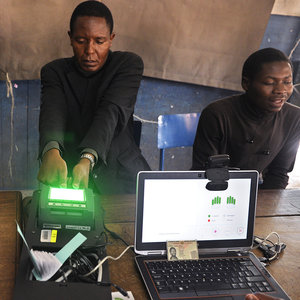
IMG_5500[12201]I recently had the honor of serving on the Uchaguzi team for the elections that just concluded in Kenya. Uchaguzi is a mapping and events platform that runs on the Ushahidi (Swahili for ‘testimony’ or ‘evidence’) open sourced software system. It crowd sources input from the field via Twitter feeds, Facebook messenger links, and SMS in order to get a true picture of voting processes, inhibit election fraud, create an aura of oversight, and serve as a central repository for violence and security issues. Ushahidi was originally developed in the Kenyan 2008 deadly riots and has subsequently served in over a hundred governance, humanitarian, and crisis situations around the globe. This successful platform and other recent similar breakthroughs have given the capital of Kenya the nickname of the “Silicon Savannah.”
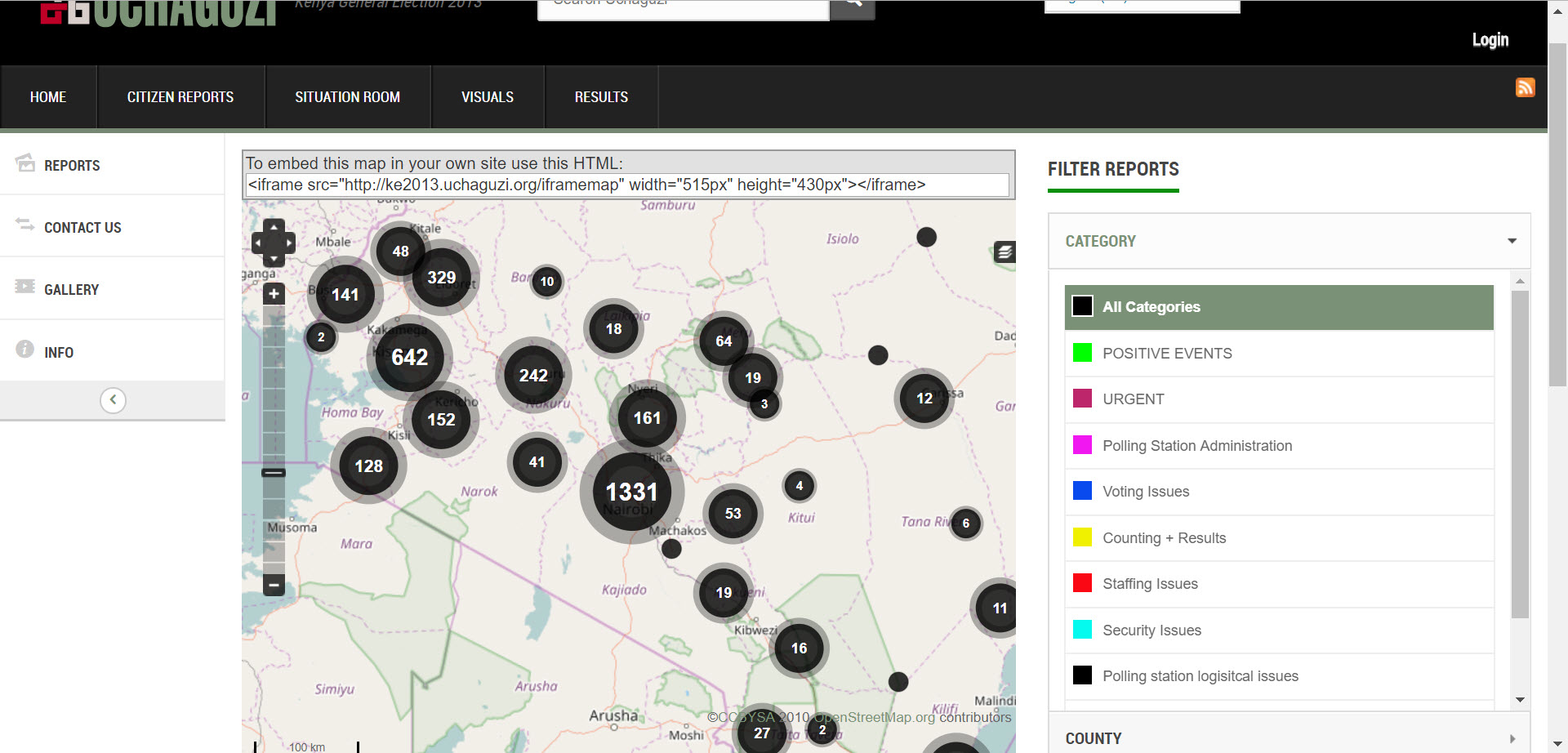
In the recently concluded August 2017 election I co-managed the Research and Analysis team (which sounds neat but the Mapping Team and Verification Teams were pretty amazing) along with the energetic and passionate Nairobi based digital humanitarian Hazel Mugo. The other institutional partners in the Uchaguzi effort were CRECO and Infonet. We are still processing the last vestiges of these August 8th elections and will be coming out with more insights over the next few weeks. (That is a long way of saying that the one hundred global digital volunteers need to catch up on their sleep!) You can learn more about the Uchaguzi technology and history here.  Here is an example of the output of the mapping facility from a past election:

uch pic 2013

Future blogs will go through the new results, analysis, and learnings in great detail. But before getting into the weeds, I would today like to spend some cognitive surplus on theory. What are the affordances of Twitter in governance and humanitarian crisis? Do users expect the same utility from Facebook Messenger as they do with a tweet or from a standard SMS text? Does the sum of the crowd input have less bias then mainstream media reporting? Is the Theory of Affordances, originally developed by Psychologist James Gibson, even the right lens by which to evaluate the mechanisms and the outcomes?

To help inform these critical grounding questions I have enrolled in the Survey of Digital & Social Media graduate course at Kennesaw State University, taught by Dr. Laura Beth Daws. Ironically, in an initial assignment paper authored by danah m. boyd (lower case intended), titled Social Network Sites; Definition, History, and Scholarship, the author immediately notes the plethora of affordances that are possibly applicable with Social Networking Sites. The full text of her very insightful, top-down, perspective can be viewed here. I look forward to the course assisting both me and you, dear reader, in identifying the connections between conflict mitigation applications and social networking theory. Additionally, the class may help to determine coherent and academically defensible structures by which to process and analyze crowd sourced events data delivered via social media. The critical value of these burgeoning humanitarian applications was highlighted this week when Ushahidi actually had to be rolled out here in the US under the DocumentHate moniker in order to help evaluate the surge of domestic hate group activity (see press release).

Stay tuned!